



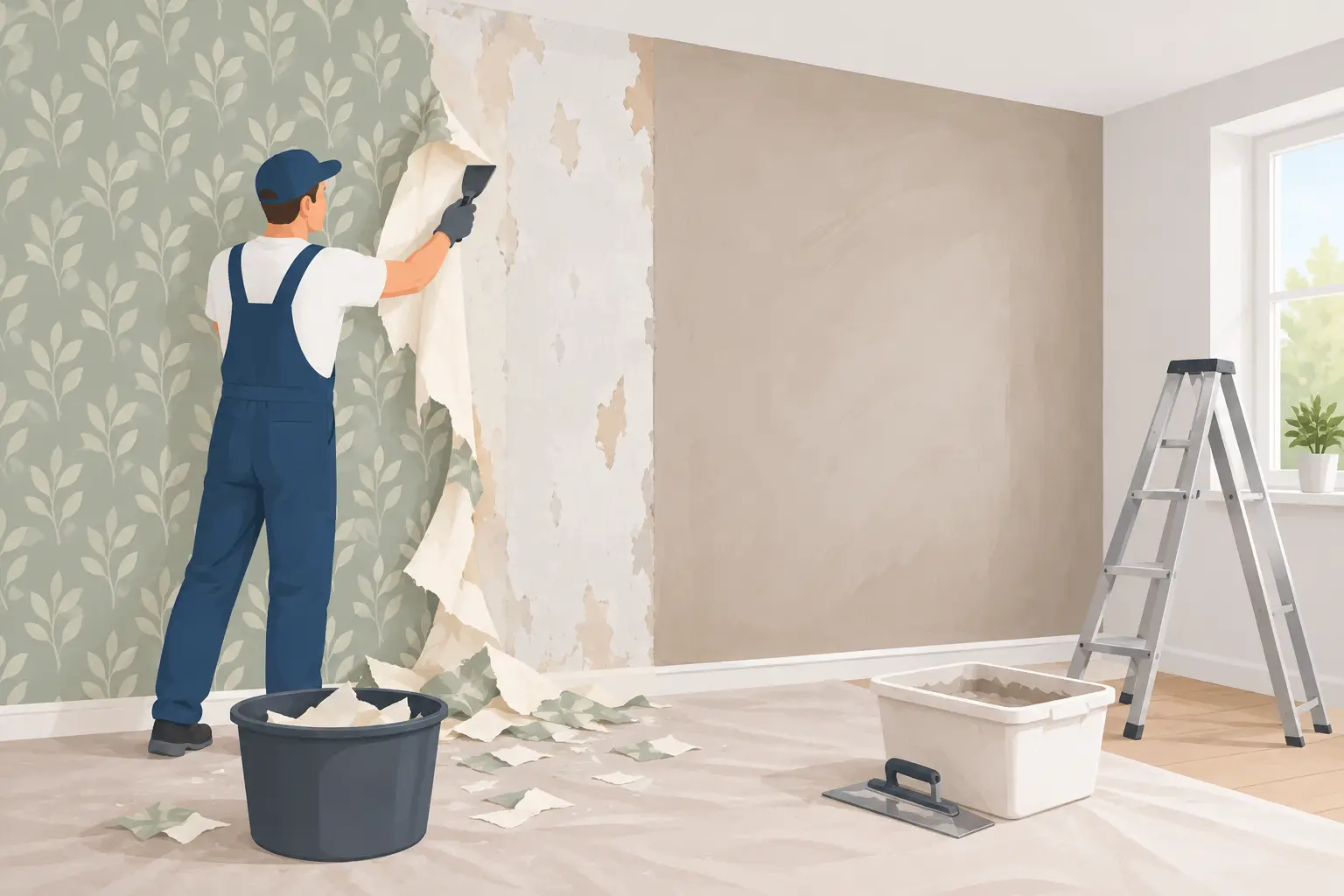
Wallpaper Removal Before Plastering a Room
A room can look completely different once the old paper is gone, but wallpaper removal is rarely as simple as pulling down a loose corner. Beneath the pattern, there may be sound plaster ready for decorating, layers of old paste, flaky paint, blown areas or repairs that need proper attention before a new finish goes on. Taking the time to assess the walls after stripping helps avoid a disappointing result later.
For homeowners, landlords and property investors, the main aim is not just to get bare walls. It is to leave a clean, stable surface that is ready for painting, lining paper, drylining or plastering. That is where careful preparation makes a visible difference.
Wallpaper removal starts with protecting the room
Stripping paper is wet, messy work. Before any sheet comes off, clear as much furniture as possible and cover what remains. Dust sheets should protect carpets and flooring, while sockets, switches, radiators and skirting boards need attention as well. Paste and softened paper can quickly find their way into gaps and corners if the area is not properly covered.
Electricity should be treated with care. Switch off the relevant circuit before working close to sockets or light switches, and do not soak these areas with water or steam. A light hand around fittings is safer than trying to rush through the edges.
Older Edinburgh properties can have several generations of wallcovering on the same wall. One layer may come away easily while another has been painted over or fixed with particularly stubborn adhesive. That is normal, and it is one reason to allow more time than expected for the job.
Choosing the right way to strip wallpaper
The best method depends on the paper, the adhesive and what sits behind it. Modern vinyl wallpaper often has a top decorative layer that peels away first. Once that layer is removed, the backing can usually be softened with warm water and a stripping solution before being lifted with a broad scraper.
Traditional paper can absorb water more readily, although it may still need scoring in places. The key is to dampen the paste without gouging the plaster underneath. Work in manageable sections, give the solution time to soak in and scrape at a shallow angle. Digging hard with a sharp scraper might feel quicker, but it can leave scores and torn patches that need filling later.
A wallpaper steamer can be useful for stubborn paper, particularly where several old layers are present. It is not always the right answer, however. Too much steam or heat can soften old plaster, affect weak joints and create extra damage on already tired walls. Steam should be used carefully, with short applications rather than holding the plate against one place for too long.
Dry stripping is sometimes possible where paper is loose, but it is rarely the best approach for a full room. Pulling hard on dry wallpaper often removes paint, filler or parts of the surface beneath it. A slower, controlled method normally saves repair time.
What to look for once the paper is off
Bare walls reveal the real condition of a room. Small nail holes and minor scuffs are expected, especially in bedrooms, halls and rental properties. Larger issues need a closer look before decorating starts.
Cracks can be harmless surface movement, but repeated cracking, loose plaster or hollow-sounding areas may indicate that the wall needs more than a quick fill. Bubbling paint, damp staining and soft plaster also need the cause checked first. Covering a damp wall with lining paper or fresh paint will only hide the problem for a short time.
It is also common to find old repairs at different levels across the wall. These may be solid enough, but once painted they can show as ridges, dips or rough patches. If the aim is a clean modern finish, this is often the point where a skim coat becomes worthwhile.
Removing paste matters as much as removing paper
A wall can appear clean while still carrying a thin layer of wallpaper paste. That residue can cause fresh paint to drag, dry unevenly or peel, and it may stop lining paper from adhering properly. Run a hand across the dry wall. If it feels slick, tacky or uneven, there is likely still paste to remove.
Wash the surface with clean warm water, changing the water regularly, and use a sponge rather than flooding the wall. Once dry, lightly sand any rough areas and remove all dust before applying a mist coat, filler or other finish. Walls need to be fully dry before further work begins, particularly in cooler rooms where drying takes longer.
When filling is enough and when plastering is the better option
A few small imperfections can be filled, sanded and painted without difficulty. This is often the most cost-effective route when the underlying plaster is sound and the room has only minor marks from wallpaper removal.
Where there are lots of torn areas, deep scrapes, uneven previous repairs or widespread cracking, repeated filling can become time-consuming and still leave an inconsistent surface. A professional re-skim creates an even base that is ready for decorating once fully dry. It can be the better investment in living rooms, hallways and bedrooms where light from windows is likely to highlight every defect.
Drylining may suit a wall where the existing plaster is beyond sensible repair, while patch plastering can deal with a local damaged area without redoing the entire room. There is no single answer for every property. The right option depends on the condition of the wall, the finish you want and the budget for the renovation.
Do not paint straight onto a questionable wall
It is tempting to put a coat of paint on after a long day of stripping, especially when the room is nearly clear. That shortcut can make defects more obvious rather than less. Paint catches on dried paste, highlights scraper marks and does nothing to stabilise loose plaster.
Check the surface in daylight and from different angles before decorating. A straightedge can help identify obvious hollows or raised repairs. If the wall is newly skimmed, allow sufficient drying time before painting. The plaster should dry naturally to an even pale colour rather than being forced with excessive heat.
For a newly plastered wall, use a suitable mist coat first. This helps the surface take the final paint properly and reduces the risk of peeling. The finish coats can then go on more evenly.
When it makes sense to call in a professional
Wallpaper removal can be a manageable DIY task in a small room with sound walls. It becomes less straightforward when there are high ceilings, multiple layers, damaged plaster, signs of damp or a deadline for tenants, decorators or other trades. A professional can strip back the wall, carry out the necessary patch repairs or skimming, and leave the room properly prepared for its next stage.
This can be especially useful during a larger refurbishment. K Vincent Plastering & Landscaping Edinburgh can carry out the preparation and plastering work as part of a practical, tidy renovation plan, so property owners are not left arranging separate trades for every stage.
A clear quote should explain what preparation is included, whether repairs are local or widespread, and what finish will be left ready for decorating. Protecting floors and furnishings, controlling dust and clearing waste are not small details. They are part of completing the job properly.
A better finish begins behind the wallpaper
Old wallpaper often hides more than an outdated pattern. It can conceal minor damage that is easy to put right, or reveal a wall that needs proper repair before it looks its best again. Strip patiently, clean away the paste and judge the surface honestly. A little care at this stage gives your paint, plaster or new wallcovering the solid base it deserves.


Comments